
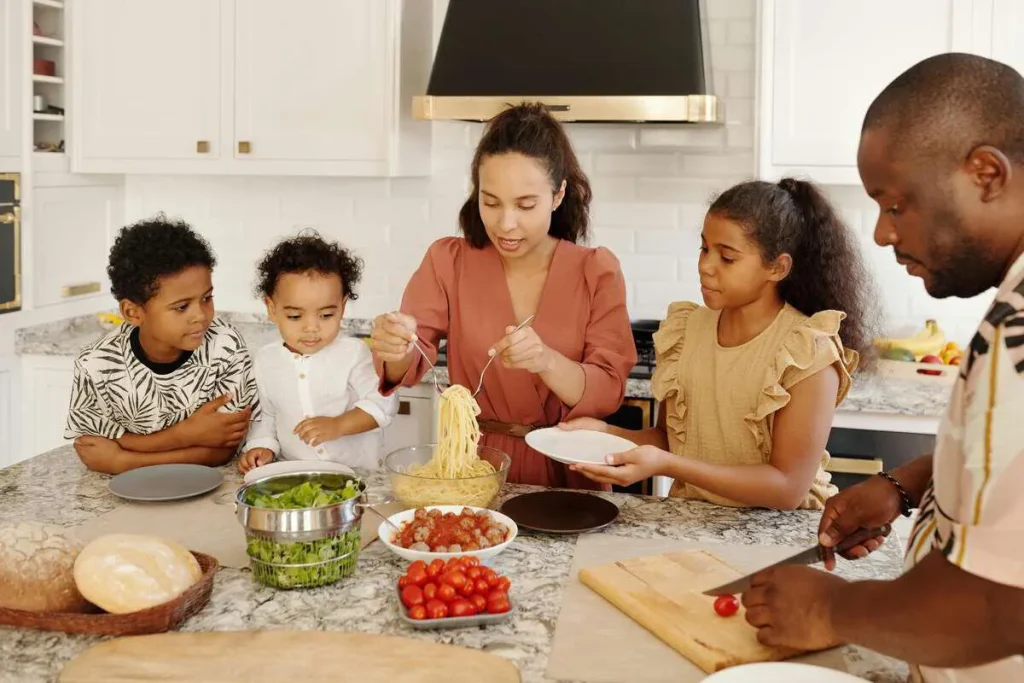
The environment we live in plays a pivotal role in shaping our eating habits. As parents, it’s essential to cultivate a home environment that promotes healthy family meals and supports the nutritional well-being of our children.
Creating an environment that encourages healthy choices can have a lasting impact on your child’s health. Today, the Healthy Kids Happen dietitian shares practical kids nutrition home tips and offers easy, actionable strategies to improve your family’s food environment.
Blog Summary: Creating a Healthy Food Environment at Home: Dietitian Tips
- Stock Up on Healthy Options. Keep fruits, veggies, whole grains, lean proteins, nuts and seeds easily accessible to encourage nutritious choices.
- Organise Your Pantry for Success. Use clear containers, labels and eye-level placement to make healthy snacks visible and appealing.
- Plan Meals Ahead of Time. Weekly meal planning, batch cooking and involving kids makes healthy eating easier and more consistent.
- Mindful Snacking. Portion control, healthier snack swaps and limiting eating in front of screens help kids avoid overeating.
- Create a Pleasant Eating Space. Family meals, calm settings and table rituals foster mindful eating and stronger family bonds.
- Teach Kids to Read Food Labels. Show children how to check nutrients, serving sizes and ingredients to build long-term healthy habits.
When you fill your pantry with healthy choices, it helps reduce the temptation to reach for unhealthy snacks. There might be initial complaints but, sooner than you think, the exception will become the norm.
1. Stock Up On Healthy Options
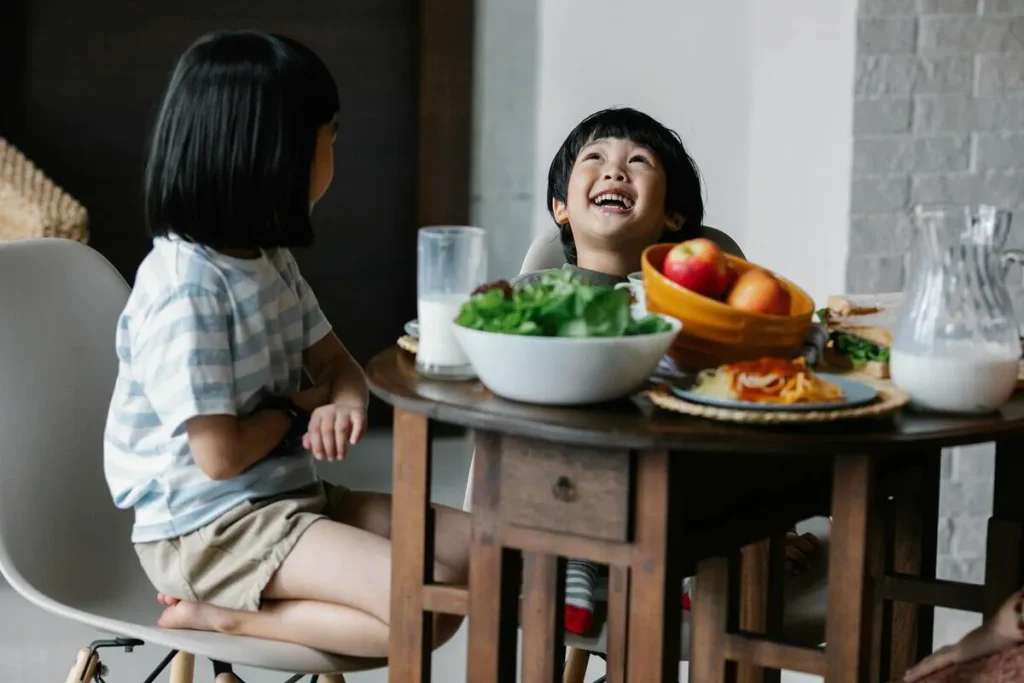
The first step in creating a healthier food environment is ensuring that healthy options are always available at home. When healthy foods are in easy reach, your child is more likely to make nutritious choices.
What to stock up on:
Fresh Fruits and Vegetables
Keep a variety of colourful produce on hand. These are rich in vitamins, minerals and fibre. For convenience, pre-cut veggies and fruits like apples, carrots and cucumber are easy snacks.
Whole Grains
Stock whole grain bread, brown rice, quinoa and oats, which provide long-lasting energy and are rich in fibre.
Nuts and Seeds
These are packed with protein and healthy fats, making them a great snack or addition to meals. Almonds, walnuts, chia seeds and flaxseeds are excellent choices.
Lean Protein Sources
Choose lean meats like chicken, turkey and fish. Alternatively, plant-based proteins like beans, lentils, tofu and tempeh are nutritious options.
2. Organise Your Pantry for Success
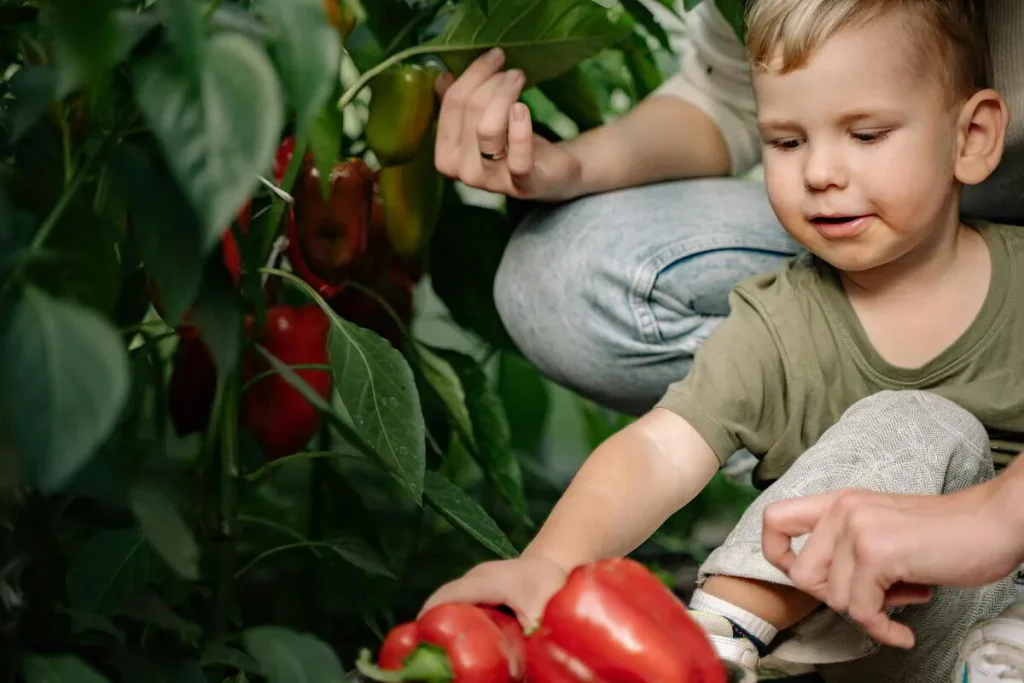
Pantry organisation can have a huge impact on the types of food your family consumes. A cluttered, disorganised pantry often leads to impulse purchases of unhealthy foods. On the other hand, an organised pantry with clearly marked shelves encourages healthier eating habits.
Tips for pantry organisation:
Keep healthy options at eye level
Place fruits, nuts and whole grains at the front of shelves for easy access. When healthy foods are more visible and easy to grab, kids are more likely to choose them.
Use clear containers
Storing snacks like nuts, seeds and dried fruits in clear containers allows your family to see what’s available, reducing the chance of unhealthy snacking.
Label items
Labeling pantry shelves with the food’s contents can encourage children to make mindful choices. For example, a label like “Healthy Snacks” or “Fruit and Nut Snacks” reminds them to choose nutritious options.
Create snack bins
Instead of keeping processed snacks on the same shelves as healthier options, create a separate snack bin filled with healthy snacks like homemade trail mix, vegetable chips and whole-grain crackers.
Meal planning takes time but can significantly improve the overall quality of your family’s meals and make it easier to maintain healthy eating habits. And, the more you do it, the easier it gets.
3. Plan Your Meals Ahead of Time
Meal planning is a key factor in promoting an environment where healthy family meals are the norm. Planning meals ahead of time helps you avoid last-minute decisions. It also ensures that meals are well-balanced and nutritionally complete.
Meal planning tips:
Set a weekly menu
Choose a day to plan meals for the upcoming week. Incorporate a variety of vegetables, lean proteins and whole grains into your meals. This ensures that your family is eating a diverse range of nutrients.
Batch cooking
Preparing large portions of healthy meals like soups, stews and casseroles and storing them in individual servings can make it easier to offer healthy meals without feeling rushed.
Involve the kids
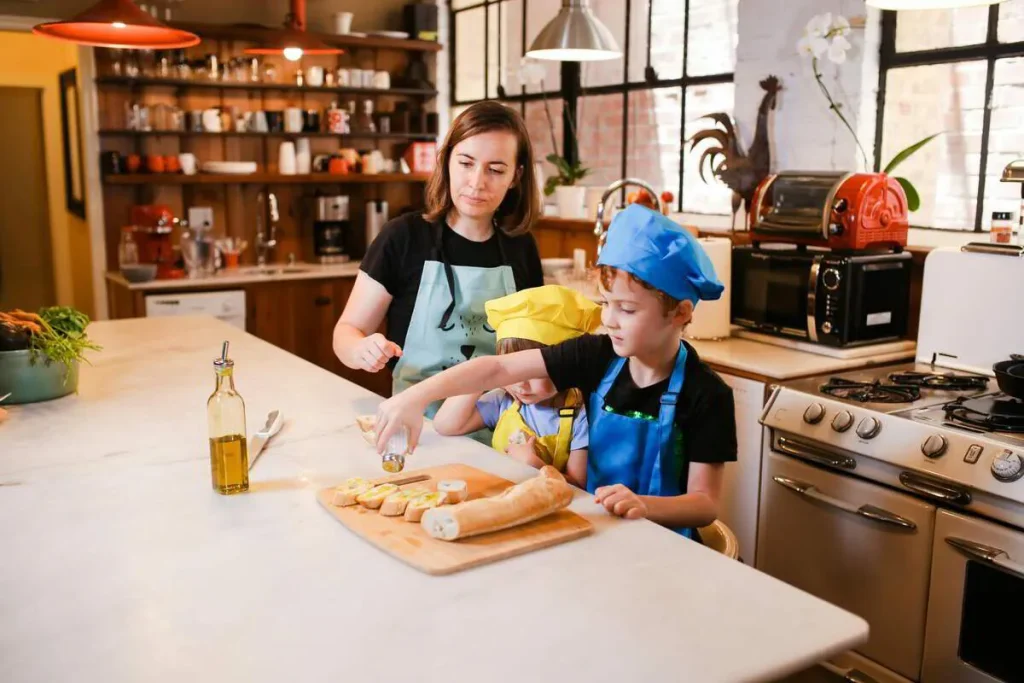
Encourage children to help with meal planning and preparation. This can include picking out healthy recipes, washing vegetables or setting the table. When children are involved in the process, they are more likely to enjoy the meals and be excited about healthy foods.
4. Reduce Temptations With Mindful Snacking
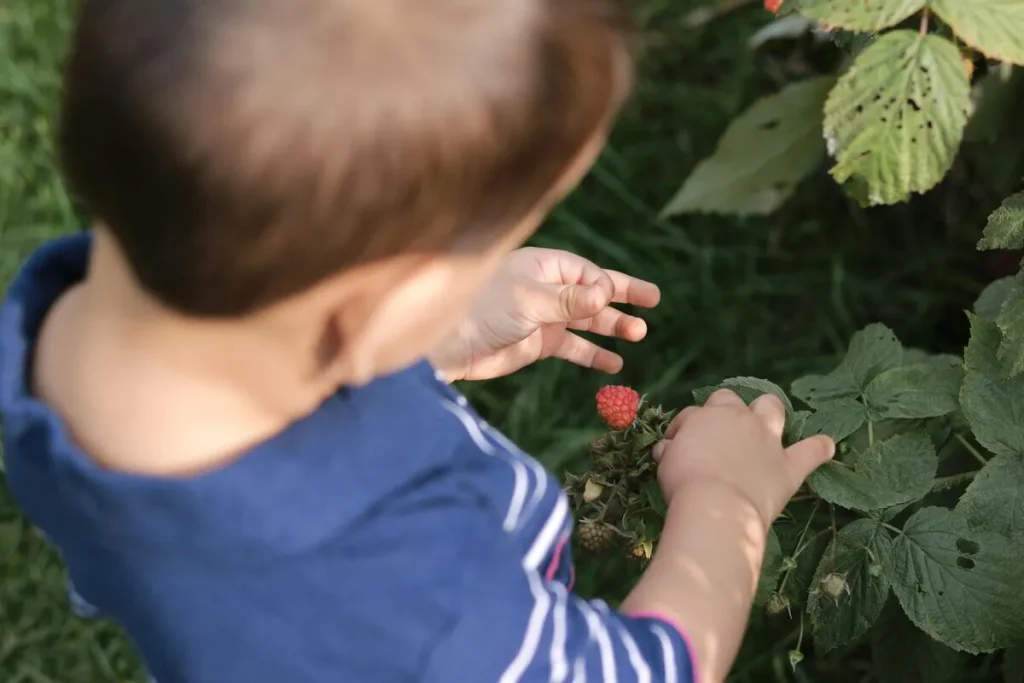
Snacking is often an overlooked aspect of healthy eating, but it plays a significant role in kids nutrition. If snacks are too high in sugar or unhealthy fats, they can easily add empty calories to your child’s daily intake. A strategy of mindful snacking can help keep your child’s nutrition on track.
Mindful snacking tips:
- Portion control: Instead of allowing kids to snack directly from bags or containers, portion out snacks into smaller bowls or containers. This helps children become more aware of portion sizes.
- Healthy snack options: Keep healthy snacks readily available, like fresh fruit, veggie sticks, homemade granola bars or yoghurt. These snacks are low in sugar and packed with nutrients.
- Avoid snacking in front of screens: Eating in front of screens can lead to mindless snacking, which increases the likelihood of overeating. Encourage mindful eating by setting designated snack times where the focus is on the food, not on a screen.
5. Create a Pleasant Eating Space
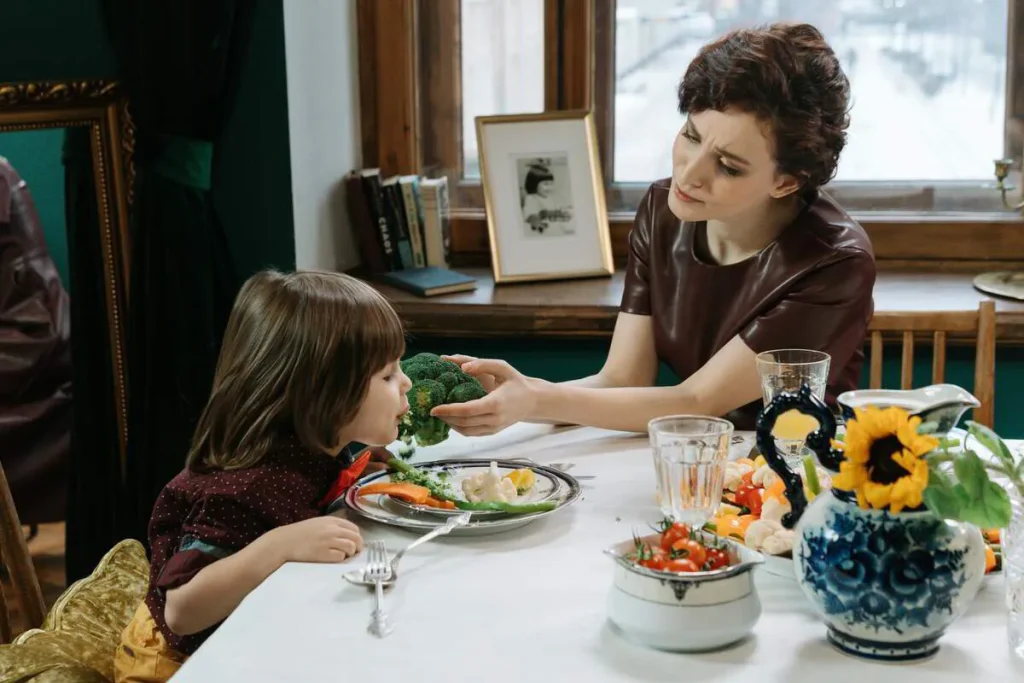
The environment in which your family eats is equally as important as the food itself. A pleasant and inviting eating space encourages mindful eating, promotes positive mealtime conversations and helps foster healthier eating habits.
Tips for creating a pleasant eating environment:
- Make mealtimes family time: Try to sit down and eat meals together as a family as often as possible. This allows everyone to talk about their day, reinforce healthy eating habits and strengthen family bonds.
- Set the table: Even if you’re in a rush, setting the table with placemats, napkins and utensils can make mealtime feel special and encourage kids to focus on the meal.
- Create a calm atmosphere: Minimise distractions like TV or loud music during meals. A calm, quiet environment helps children focus on their food and develop better eating habits.

6. Teach Your Kids to Read Food Labels
One of the best ways to help your children develop healthy eating habits is to teach them how to read food labels. Understanding the nutritional value of food empowers children to make informed choices, even when they’re outside of the home.
Teaching tips:
- Look for key nutrients: Teach your kids to check for the presence of fibre, protein and healthy fats while avoiding excessive sugar and sodium.
- Understand serving sizes: Help children understand the concept of serving sizes to avoid overeating.
- Discuss ingredients: Explain that whole foods (such as fruits, vegetables and grains) are the best choice, while heavily processed foods and those with long ingredient lists are not ideal.
A Healthy Family Meals Environment
Creating a healthy food environment at home isn’t just about the foods you keep in your kitchen; it’s about fostering an atmosphere that encourages positive choices and healthy habits.
Today is your first step towards setting your family up for long-term health and wellness.
Use our evidence-based home tips for kids nutrition and role-modelling.