Discussing weight with anyone can be a delicate subject. However, when it comes to your child, it can be quite the minefield. The primary strategy of any such planned discussion should be the promotion of a healthy lifestyle and well-being. To help you avoid any volatile areas, it’s important to approach the topic in a way that doesn’t cause harm to their self-esteem or sense of body image.
Blog Summary: How to Talk to Your Kids About Weight
- Focus on Health, Not Appearance – Frame conversations around feeling good, energy and strength rather than body size.
- Be a Positive Role Model – Demonstrate healthy behaviours through your own lifestyle and choices.
- Use Age-Appropriate Language – Adapt discussions to your child’s developmental stage to keep them supportive and clear.
- Celebrate Healthy Choices as a Family – Turn wellbeing into a shared experience by cooking, moving and learning together.
- Encourage Open Communication – Create a safe, judgment-free space for your child to express feelings and ask questions.
- Focus on Progress, Not Perfection – Highlight small, sustainable steps rather than unrealistic goals.
- Be Patient and Compassionate – Support change with empathy, reassurance and understanding.
For families dealing with childhood obesity or concerns about weight, talking about health and weight can be daunting. With the right mindset and strategies, parents can positively guide their children through these conversations without introducing shame or negativity.
Read how to navigate these sensitive discussions by focusing on health rather than appearance, celebrating healthy choices and fostering an environment of open communication.
1. Focus On Health, Not Appearance
When talking to children about weight, it’s essential to avoid discussing body image in a way that ties their self-worth to their appearance. Instead, emphasise the importance of health, longevity, investing in future health, glowing skin, solid health foundations, feeling good and mental alertness.
Rather than saying, “You need to lose weight,” try framing the conversation around how healthy habits help children feel more energetic, improve their mood and make them feel stronger. Emphasise that making healthy choices, like eating nutritious foods, staying active and getting enough sleep, is the key to feeling good and supporting their body’s growth.
The goal should be to encourage children to make decisions based on how they feel, not how they look.
Encouraging activities that improve their physical and mental well-being without focusing on weight can foster a more balanced perspective on health.

2. Be A Positive Role Model
Children learn by example. If parents exhibit healthy behaviours, children are more likely to adopt them as their own. Lead by example by making healthy lifestyle choices, whether it’s eating nutritious meals or engaging in regular physical activity.
For instance:
- Instead of telling your child to go for a walk, go walking together.
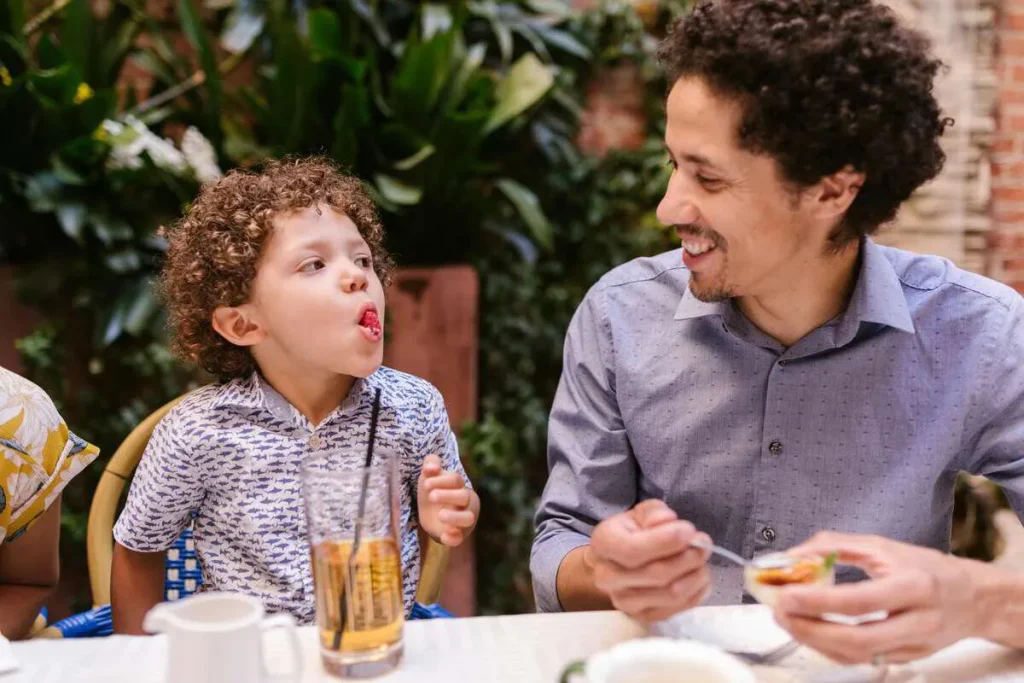
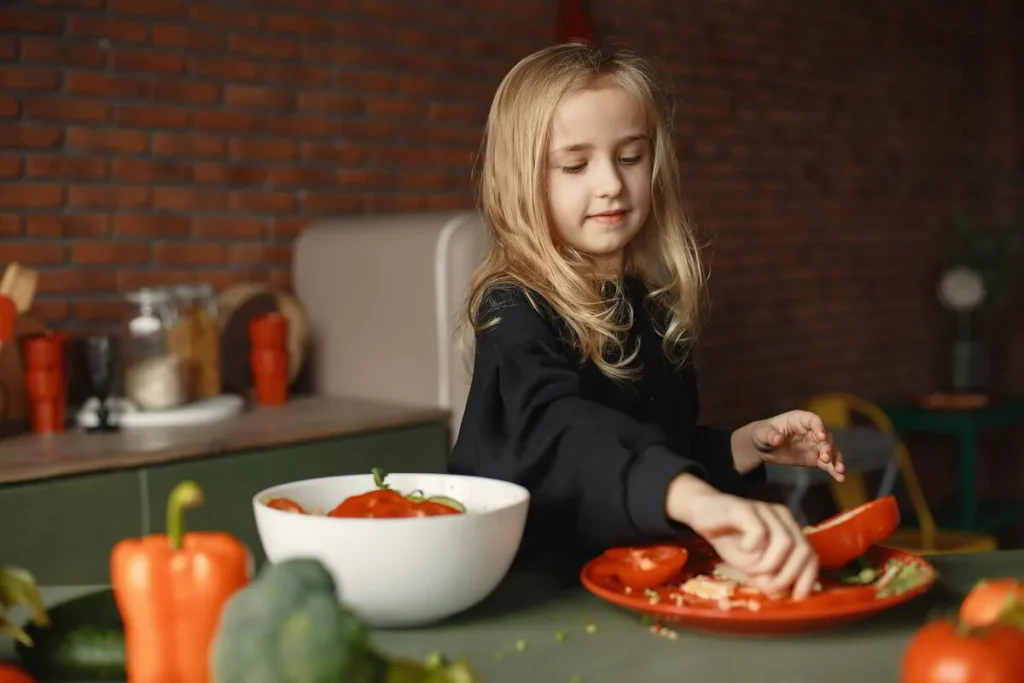
- Share a healthy meal with your family and involve your child in meal prep.
This way, you create a positive and supportive environment where your child can see the benefits of healthy living firsthand. Leading with love and action is an excellent way to inspire children to embrace healthy habits without the pressure of weight-related discussions.
In a study “Over-imitation of Human Action in 3-Year-Old Children”, by Cecilia R. P. Lyons, Michael L. Young, and Stephen J. K. G. G. Smith, the concept of over-imitation suggests that children tend to copy all of an adult model’s actions, even those irrelevant to the task at hand. This behaviour underscores the significant role parents play as models for their children, influencing their learning and development through both intentional and unintentional demonstrations.

3. Use Age-Appropriate Language
When addressing sensitive topics like weight and health, it’s important to use language that suits your child’s age and developmental stage. Younger children may not fully understand complex discussions about weight, so it’s best to focus on feelings and overall health.
For example, instead of saying, “We need to talk about your weight,” you might say, “Let’s talk about the foods and activities that help us feel strong and healthy.”
With older children and teenagers, the conversation can be more direct, but still non-judgmental. Respect their autonomy while emphasising health rather than focusing on weight loss.
By using language appropriate to their age, you can ensure that your child feels understood and supported, rather than singled out or criticised.

4. Celebrate Healthy Choices As A Family
Promoting a healthy lifestyle should be a family affair. Children thrive when they feel supported and creating a family routine that revolves around healthy choices can make them feel empowered and included in the process.
Celebrate small victories together, such as cooking a healthy family meal or completing an outdoor activity. The more children see their families prioritising well-being, the more likely they are to internalise these habits.
Instead of focusing on what needs to change, focus on what’s going right and celebrate those healthy steps together as a family. This strengthens bonds and creates positive experiences around health that don’t revolve around weight.
5. Encourage Open Communication
Open, honest and supportive communication is the foundation of any healthy relationship, especially when it comes to sensitive topics like weight. Encourage your child to express their feelings about their body and health and listen without judgment.
Ask open-ended questions such as, “How do you feel when we eat healthy meals together?” or “What activities do you enjoy the most?” These questions help your child feel more comfortable talking about their health and wellness in a way that doesn’t focus on appearance.
By providing a safe space for these discussions, you’re teaching your child to see health as a journey and not something to be ashamed of. It’s also an opportunity to reassure them that you’re on their team, no matter what.

6. Focus On Progress, Not Perfection
It’s important to keep in mind that the goal is progress, not perfection.
Healthy living is about making small, sustainable changes rather than striving for unrealistic expectations. Fostering an understanding that everyone has their ups and downs in their health journey can help your child feel less pressure.
Encourage your child to take ownership of their health at their own pace. Celebrate their progress, whether it’s trying a new vegetable, joining a sports team or simply feeling better after a walk in the park. The key is to highlight the positive aspects of each step, reinforcing that the journey toward health is about improvement, not perfection.
7. Be Patient And Compassionate
It’s important to approach these conversations with kindness and patience. Changing habits takes time and your child’s health journey will be a process. Acknowledge their efforts and reassure them that making healthy choices is something they can always improve upon, but they are already on the right track.
Your compassion will help them feel supported and confident in their ability to make healthier choices. Additionally, children who feel accepted and understood are more likely to engage in positive behaviour changes.
It’s Time To Chat
Talking to your child about weight doesn’t have to be a difficult or shameful conversation. By focusing on health, being a positive role model, using age-appropriate language, celebrating healthy choices as a family and encouraging open communication, parents can foster a supportive and positive environment for their children.
Ultimately, the goal is to teach children that health is about feeling good, being strong and making choices that nourish their bodies, not about reaching a specific weight.
By being compassionate and patient, you can ensure that your child grows up with a healthy and balanced approach to both their physical and emotional well-being.
Visit us online for more tips and expert courses to improve your child’s health.