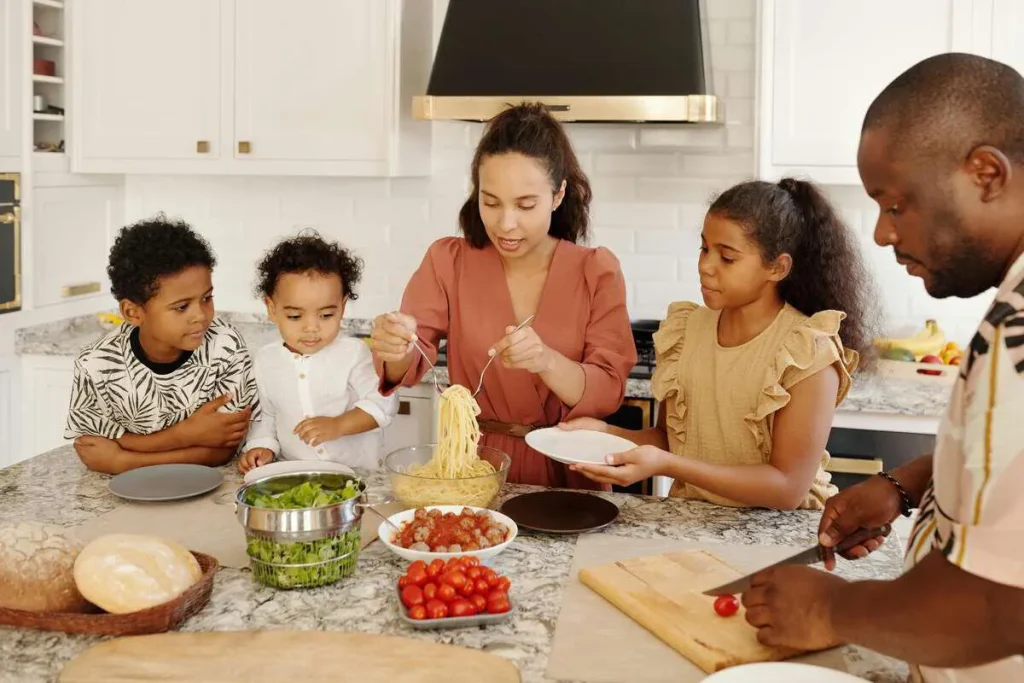

One of the most impactful changes parents can make to promote healthier lifestyles for children is in the kitchen. Healthy family meals meal prep ideas are one of the best ways to serve balanced meals throughout the week, and involving kids in the process is key to setting them up for long-term success.
Blog Summary: How to Meal Prep as a Family for Healthier Kids
- Family Meal Planning Together – Create a weekly plan with kids’ input to include balanced breakfasts, lunches and dinners.
- Involving Kids in Cooking – Assign age-appropriate kitchen tasks so children learn nutrition and cooking skills while having fun.
- Batch Cooking for Efficiency – Prepare grains, proteins and vegetables in bulk to save time, reduce food waste and manage portions.
- Balanced Plate Approach – Build meals with lean protein, healthy fats, complex carbs and colourful fruits/veggies for complete nutrition.
- Portion Control Made Simple – Use containers to divide meals and snacks into kid-friendly portions that prevent overeating.
- Making Meal Prep Fun – Turn cooking into a family activity with music, themed meals and “build-your-own” dinner nights.
- Smart Storage & Organisation – Label, store and freeze meals for quick access, less waste and stress-free mealtimes.
Nutrition is an essential aspect of ensuring a child’s growth, energy levels and emotional wellbeing. By getting everyone involved in kids’ nutrition and family cooking, you can teach your children about nutrition’s importance while also spending valuable quality time together.
This step-by-step guide will show you how to engage in healthy family meal prep that makes preparing mealtime fun, easy and educational while building a wonderful family tradition.
Step 1: Start With a Meal Plan
The first step in successful meal prep is creating a plan. A meal plan is the blueprint for your week’s meals, helping ensure you’re cooking balanced, nutrient-rich dishes while reducing food waste. Start by sitting down as a family and discussing the meals you’d like to make for the week. Ask your kids to share their favourite meals and include them in the planning process.
Incorporating a variety of proteins, whole grains and vegetables is key. Make sure you’re including colourful, nutrient-dense foods that will support your child’s growth, energy levels and overall health. For example, you can plan a week that includes:
- Breakfast Options: Oatmeal with fruit, scrambled eggs with whole grain toast, smoothies.
- Lunch Options: Quinoa salads, whole wheat wraps with lean protein, veggie-packed pasta.
- Dinner Options: Grilled chicken with roasted vegetables, stir-fried tofu with brown rice, baked salmon with sweet potato.
Planning your meals in advance gives you a roadmap to follow throughout the week, making meal prep easier and faster while, often, saving on grocery budgets.

Step 2: Healthy Family Meal Prep
Meal prep doesn’t have to be a solo endeavour. Involving your kids in the cooking process is not only fun but also an opportunity to teach them important life skills.
Start by assigning age-appropriate tasks based on your kids’ abilities. Younger children can help with washing vegetables, stirring ingredients or setting the table. Older children can take on more complex tasks like chopping vegetables (with supervision), measuring ingredients or assembling meals.
When kids feel like they’re a part of the process, they are more likely to be excited about the meals they’ve helped prepare. This can also create a sense of ownership over their nutrition and encourage healthier eating habits. You can also use this time to talk about the importance of balanced meals and portion control, turning mealtime preparation into a valuable learning experience.
Step 3: Prepare in Batches
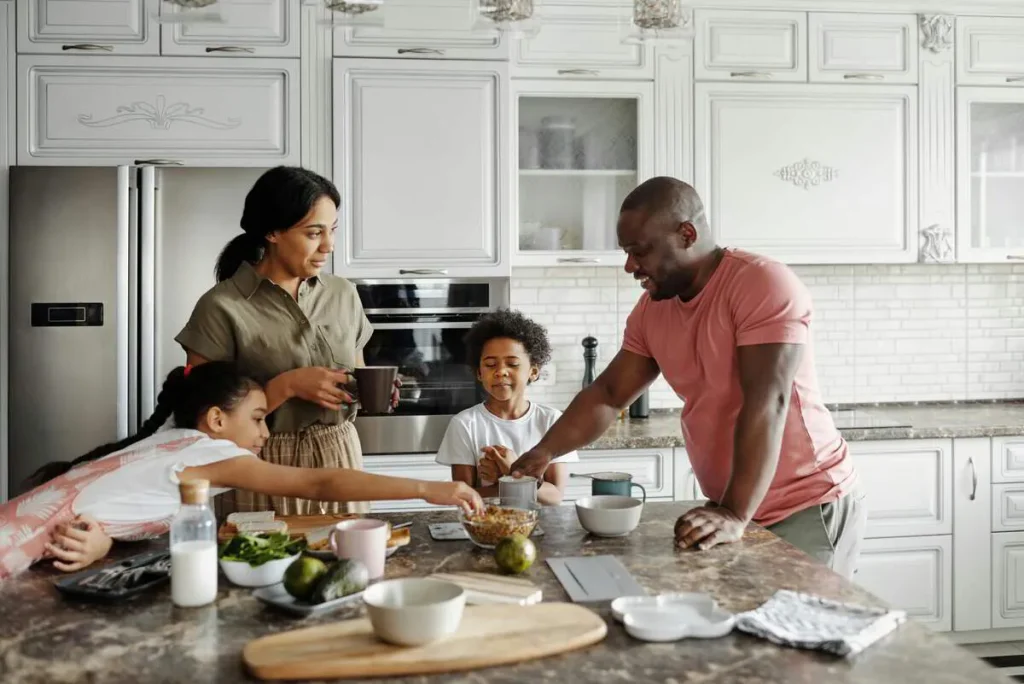
The key to meal prepping is preparing large quantities of food at once and storing it for later use. This method allows you to create multiple nutritious meals and do family cooking without spending hours in the kitchen every day. It also helps with portion control, as you can separate meals into individual containers that are easy to grab and reheat.
For example:
- You can cook a large batch of brown rice or quinoa that can be used in several meals throughout the week.
- You can roast a variety of vegetables at once, which can be added to salads, wraps or served as sides.
- Grill or bake several pieces of chicken at once can save time and be used for different meals, such as salads, wraps or sandwiches.
Batch cooking not only makes mealtime easier but also allows you to control portions and ensure that your child is getting the right amount of nutrients. It’s also a great way to prevent food waste by using leftovers for lunches or dinners throughout the week.
Step 4: Keep Meals Balanced
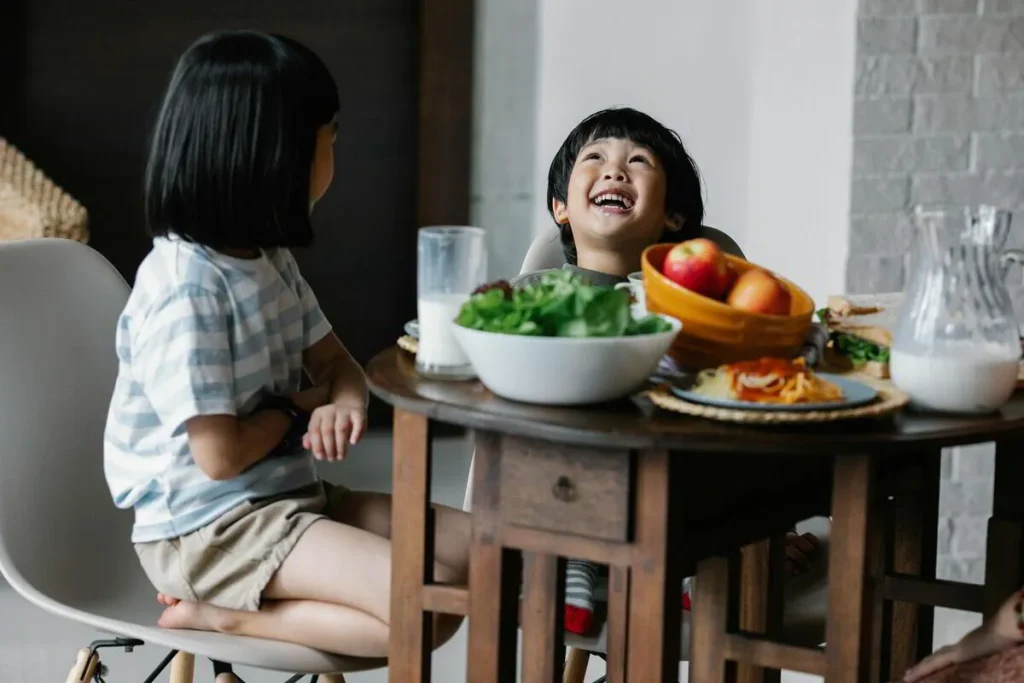
When preparing meals for your family, it’s essential to maintain balance. A well-balanced meal should include:
- Protein: Lean meats, fish, tofu, legumes, eggs or nuts.
- Healthy Fats: Avocado, olive oil, nuts, seeds or fatty fish.
- Complex Carbohydrates: Whole grains like quinoa, brown rice, oats or sweet potatoes.
- Fruits & Vegetables: Aim for a variety of colours to ensure a range of vitamins, minerals and fibre.
A balanced plate should be about half vegetables, a quarter protein and a quarter carbs. Encourage your kids to try new vegetables or fruits they may not have tasted before, making the experience fun and educational.
One idea is to create a “build-your-own” meal night, where everyone can assemble their own dinner from various pre-prepared ingredients. For example, set out bowls of cooked quinoa, cooked brown rice, grilled chicken and fish, roasted vegetables, fresh greens and toppings like hummus, guacamole or salsa. This way, everyone can create their own customised meal while still getting a balanced combination of nutrients. The leftovers make the next day’s meals.

Step 5: Portion Control
Portion control is an important aspect of healthy eating, especially when managing a child’s weight. When meal prepping, it’s easy to divide meals into appropriate portions using containers. This helps control how much your child is eating at each meal, preventing overeating while ensuring that they’re getting enough to stay satisfied.
Use clear, labelled containers to store meals in the fridge or freezer and make sure to include a variety of meals for different times of the day. You can portion out snacks as well, making it easier for your child to grab a healthy option when they’re hungry.

Step 6: Make It Fun
Meal prepping doesn’t have to feel like a chore. In fact, it can be a fun, creative activity that the whole family enjoys. Try to make it an interactive experience by playing music in the kitchen, creating themed meals or challenging each other to come up with new recipe ideas. You can also have a weekly “family cooking night” where everyone contributes a dish to the meal.
Additionally, use this time to educate your children about nutrition. Explain why certain foods are good for their health and how a balanced meal helps them feel energetic and focused throughout the day. This approach can foster an appreciation for healthy eating habits that can last a lifetime.
Meal prepping as a family is a powerful tool for creating healthier eating habits and making mealtime less stressful. By involving your kids in the process, you’re not only saving time but also teaching them valuable lessons about nutrition and cooking. The key to successful family meal prep is planning, portion control and balancing meals to ensure everyone is getting the nutrients they need to thrive.

Step 7: Store and Organise Meals
Once you’ve cooked and portioned out meals, the next step is to store them properly. Make sure to label each meal with the date it was prepared and store items that need to be eaten sooner at the front of the fridge or freezer. You can also freeze some meals in smaller portions to keep them fresh for longer.
Organise your meal prep containers in a way that makes it easy for everyone to grab their meals. This system can also help prevent food waste, as you’ll know exactly what you have on hand for the week.
Start Your Family’s Healthy Meal Prep Journey Today and Make Nutrition Fun for Kids!
Book our helpful online course for comprehensive family cooking advice and guidance.